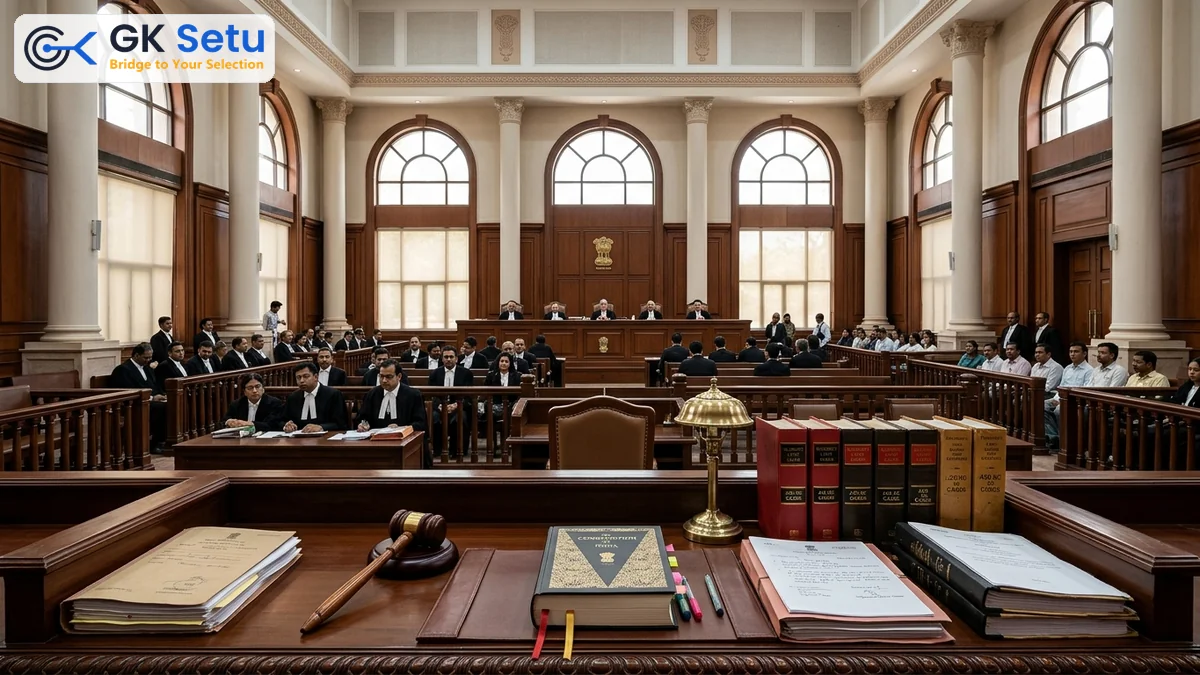
What Happened Yesterday
On November 4, 2026, the Ministry of Law and Justice notified statutory guidelines establishing an integrated constitutional compliance framework. This reform binds executive policy-drafting directly to decades of landmark judicial precedents.
How a 1949 Text Governs Modern Governance
Governing a nation of 1.4 billion people demands legal predictability. Without firm constitutional guardrails, routine policy execution risks administrative friction.
India’s Constitution serves as the ultimate authority. When Parliament passes legislation or an executive department issues orders, courts evaluate those actions against constitutional standards. Crucially, the regulatory framework issued on November 4, 2026, establishes a structured operational bridge between daily rulemaking and constitutional jurisprudence.
From Constitutional Principles to Executive Audits
Why do executive orders require prior legal vetting against judicial precedents?
Historically, administrative bodies published rules without central tracking of Supreme Court judgments. Consequently, citizens frequently filed petitions to strike down non-compliant executive orders; this dynamic increased litigation burdens across high courts.
The November 2026 regulatory framework introduces a mandatory tool: the Constitutional Precedent Audit.
| Phase | Mechanism | Constitutional Target |
|---|---|---|
| Drafting Stage | Precedent Verification | Article 13 Compliance |
| Vetting Stage | Reasonableness Assessment | Article 14 & Article 21 Tests |
| Final Approval | Basic Structure Certification | Article 368 Limits |
Architectural Anchors of Indian Polity
- 1. Legislative Power versus Basic Structure (Article 368)
- In Kesavananda Bharati v. State of Kerala (1973), a 13-judge bench ruled by a 7:6 majority that while Parliament retains broad powers to amend the Constitution under Article 368, it cannot abridge its essential structural pillars—including democracy, secularism, and judicial review.
- 2. Expansion of Personal Liberty (Article 21)
- In Maneka Gandhi v. Union of India (1978), the Supreme Court determined that procedure depriving a person of personal liberty must satisfy the test of being just, fair, and reasonable, eliminating arbitrary executive action.
- 3. Institutional Equilibrium (Minerva Mills, 1980)
- In Minerva Mills v. Union of India, the judiciary established that Fundamental Rights under Part III and Directive Principles under Part IV operate in balance. Neither section abrogates the other.
Key Concepts Explained
- Basic Structure Doctrine: A judicial safeguard preventing constitutional amendments from dismantling democratic and structural features.
- Judicial Review: The judicial mechanism evaluating whether statutes and executive actions conform to constitutional mandates.
- Ultra Vires: Actions taken beyond authorized legal or statutory capacity.
Looking Ahead
- Internal Reviews: Ministries will audit active administrative rules by December 2026 to ensure conformity with the new notification.
- Legal Vetting Panels: Specialized legal cells will evaluate draft bills prior to parliamentary introduction.
- Training Integration: Public administration academies will incorporate these auditing procedures into civil service training programs.