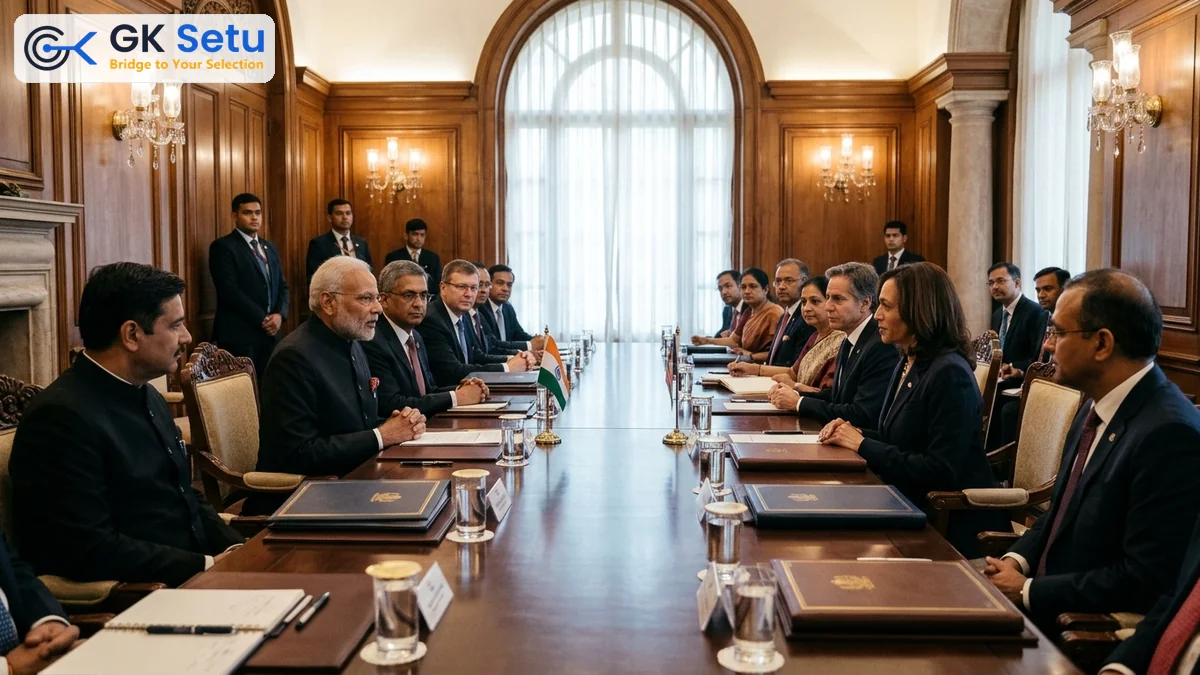
Key Exam Topics & Concepts Covered
- Vienna Convention on Diplomatic Relations (1961): The foundational international treaty defining the framework for diplomatic privileges, immunities, and official conduct between sovereign states.
- Memorandum of Understanding (MoU) vs. Bilateral Treaty: Non-binding administrative agreements expressing shared intent (MoUs) versus legally binding international instruments registered under Article 102 of the UN Charter (Treaties).
- Ministry of External Affairs (MEA): The apex nodal ministry executing India's foreign policy, bilateral dialogues, state visits, and multilateral summit engagements.
The "What Happened Yesterday" Catalyst
On November 6, 2026, the Government of India published revised statutory notifications standardizing administrative protocols and inter-ministerial clearances required for bilateral agreements and summit outcomes.
The Everyday Analogy: The Apartment Complex Network
Diplomacy requires strict rules. Consider a gated residential community where each flat owner maintains absolute authority inside their private residence; sovereignty remains uncompromised. Yet managing shared water lines or establishing security gates demands structured committees and written covenants.
Bilateral relations work identically. A bilateral treaty mirrors a formal contract between two neighbor households sharing a solar power grid. By contrast, a global summit operates like an annual general meeting where all residents gather to vote on common rules and resolve boundary disputes.
The 3-Tier Layered Blueprint of Diplomatic Execution
Diplomatic intent moves through three distinct administrative levels before impacting domestic legal structures:
- Tier 1: Apex Leadership & Strategic Mandate
- Bilateral policy originates within the Prime Minister's Office (PMO), the Cabinet Committee on Security (CCS), and the Ministry of External Affairs (MEA). The political executive sets strategic targets. Crucially, before any binding treaty takes effect, the text undergoes scrutiny by the Ministry of Law and Justice alongside formal sanction from the Union Cabinet.
- Tier 2: Transmission Pipeline
- Once executive approval is secured, diplomatic apparatuses operationalize the mandates. High-ranking summit Sherpas negotiate line-by-line terms months before multilateral events like the G20, BRICS, or SCO. Notably, Joint Working Groups (JWGs) comprising technical experts across ministries track execution timelines and resolve statutory bottlenecks on the ground.
- Tier 3: Grassroots Impact
- High-level handshakes directly alter economic and legal environments for citizens:
- Trade and Tariffs: Preferential Trade Agreements (PTAs) reduce customs duties on goods, directly lowering costs for domestic consumers.
- Mobility Agreements: Bilateral Social Security Agreements (SSAs) accelerate visa processing and safeguard cross-border pension contributions for workers.
- Financial Integration: Interlinking domestic real-time payment networks cuts cross-border remittance charges for migrant workers.
Fast Facts Grid
| Indicator / Dimension | Statutory & Operational Specification |
|---|---|
| Apex Nodal Authority | Ministry of External Affairs (MEA), Government of India |
| Primary Regulatory Mechanism | Transaction of Business Rules, 1961 & Notified Bilateral Guidelines |
| Key Execution Outputs | Comprehensive Economic Partnership Agreements (CEPAs), MoUs, and Joint Declarations |
Summary Rule of Thumb
Global summits define long-term vision. Bilateral treaties establish binding legal bridges. In practice, inter-ministerial pipelines convert high-level diplomatic handshakes into measurable economic benefits for citizens.