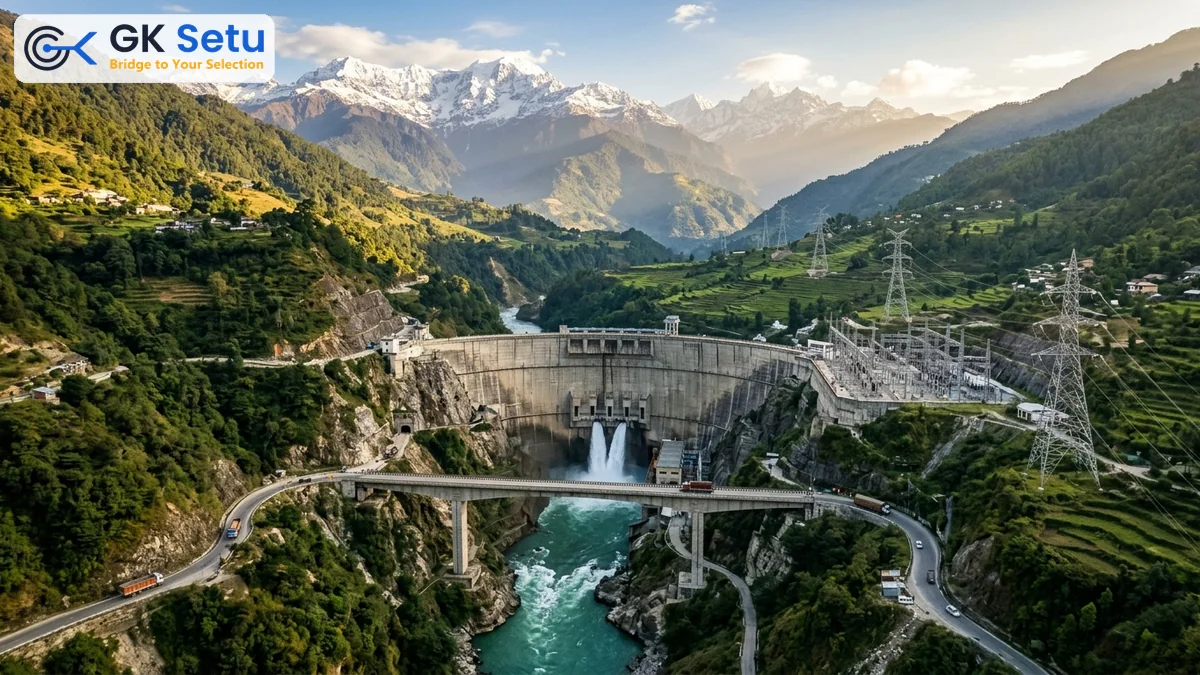
Economic Geography of India-Nepal Transit and Energy Ties
- Economic Geography: The study of how economic activities, trade corridors, and resource distribution are shaped by physical terrain and international borders; highly relevant for UPSC and State PSC Geography papers.
- Bilateral Transit Treaties: Formal legal agreements governing the movement of goods, cargo, and energy across sovereign frontiers; crucial for International Relations and South Asian geopolitics.
- Himalayan Frontier Management: The strategic and ecological handling of mountainous borders, hydroelectric potential, and cross-border connectivity.
, diplomatic and economic assessments spotlighted a strategic policy reset in India-Nepal relations, navigating inherent bilateral limits across shared transit and energy corridors.
Have you ever wondered how an invisible line drawn across the rugged peaks of the Himalayas can dictate the price of electricity in your home or the smooth flow of cargo trucks on a highway?
Welcome to the study of Economic Geography. Imagine two close neighbors sharing a massive, bustling backyard. One neighbor sits atop towering mountains overflowing with rushing rivers that generate clean hydroelectric power, while the other possesses the vast industrial market, capital, and technology needed to build mega-dams. That dynamic duo is India and Nepal.
Why is this policy reset happening right now? At its core, this diplomatic recalibration is driven by the urgent need to modernize connectivity and resource-sharing. For decades, the relationship has been anchored by the historic 1950 Treaty of Peace and Friendship, which established open borders and deep civilisational ties. However, modern economies demand high-speed rail links, high-voltage power transmission grids, and digitized trade transit points along their shared Himalayan frontier.
When New Delhi and Kathmandu sit down at the negotiating table, they are not just talking politics; they are mapping out economic lifelines. Nepal wants greater transit access to third-party global markets through Indian ports, while India seeks regional energy security and stable geopolitical buffers. Yet, managing this sensitive relationship involves navigating very real strategic constraints and domestic political limits in both capitals.
Jargon Buster / Key Terms Explained:
- Economic Geography: Studying the spatial organization of economic activities—why factories cluster near rivers, how mountain ranges alter trade routes, and how borders influence wealth distribution.
- Transit Treaty: A legal framework that allows landlocked nations like Nepal to move cargo containers through a transit neighbor's territory like India to reach the open sea without excessive customs bottlenecks.
- Hydropower Cooperation: Capturing the kinetic energy of plunging mountain waterfalls and converting it into electricity transmitted to distant urban industrial hubs.
As this strategic reset unfolds across the Himalayan landscape, specific operational milestones are taking shape on the ground:
- Grid Interconnection Milestones: Engineers and policymakers are accelerating joint technical talks to expand cross-border power transmission lines, allowing surplus Nepalese electricity to flow into the Indian grid during peak demand seasons.
- Transit Corridor Modernization: Both governments are working to upgrade land customs stations and implement electronic cargo tracking to slash transit times for commercial goods moving across the border.
- Diplomatic Framework Reviews: High-level bilateral committees monitor strategic constraints continuously, ensuring that foundational arrangements established by the 1950 Treaty adapt effectively to modern economic realities.