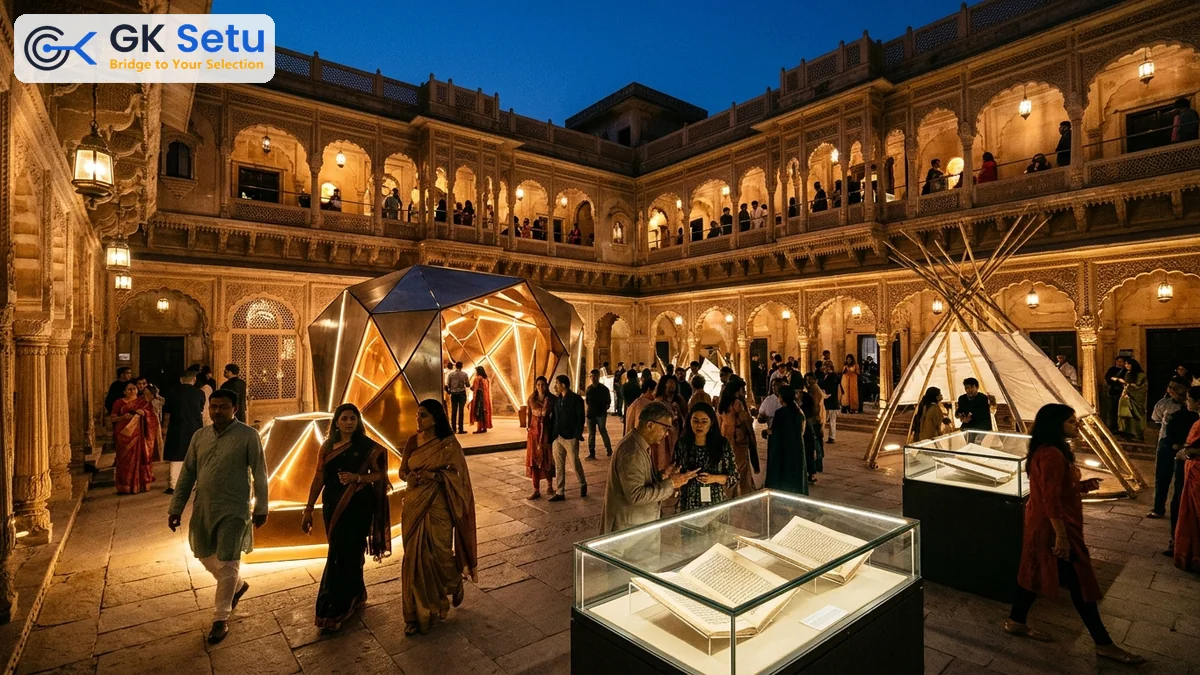
India Biennale and Regional Literature Shape Heritage Revival
Key Exam Topics & Concepts Covered
- Cultural Diplomacy & Heritage Preservation: The strategic integration of historical monuments, national biennales, and regional literature to reinforce national identity and soft power. Highly relevant for UPSC Civil Services.
- Regional Literary Integration: Platforms like the Shillong Literary Festival that institutionalize indigenous voices from Northeast India into the national literary mainstream.
The Catalyst: On 16 November 2026, the India Biennale announced its grand return to Delhi historical monuments, running alongside literary showcases in Shillong.
Imagine standing inside a 16th-century Mughal monument in Delhi, where cool stone meets contemporary modern art. Historically, a nation is measured by GDP growth; today, institutionalized heritage preservation defines national prestige. Across India, a cultural revival is underway, anchoring national identity in indigenous roots.
On 16 November 2026, the cultural landscape shifted with the India Biennale, transforming Delhi heritage sites into a 108-day public showcase. This convergence links history with modern public thought. Simultaneously, the Shillong Literary Festival opened on the same day, projecting young indigenous voices onto the national map. In Pune, artisans established a record with 455 intricately crafted heritage-themed baked installations.
"A country's heritage is not a relic locked behind glass; it is a living dialogue between ancestors, youth, and the global stage."
Zooming In: What This Means For You
- For Students & Exam Aspirants: UPSC and State PSC aspirants must note how decentralized festivals and metropolitan biennales act as twin engines for cultural federalism. Remember key metrics: the 108-day Delhi Biennale duration and Pune's 455 baked installations.
- For Working Professionals & Citizens: Urban cultural interventions turn neglected historical sites into accessible community hubs. Heritage zones become weekend spaces for families, boosting local tourism and creative industries.
Looking ahead, heritage and literature function as dynamic drivers of national unity. By marrying historic monuments with regional voices, India builds its global identity.